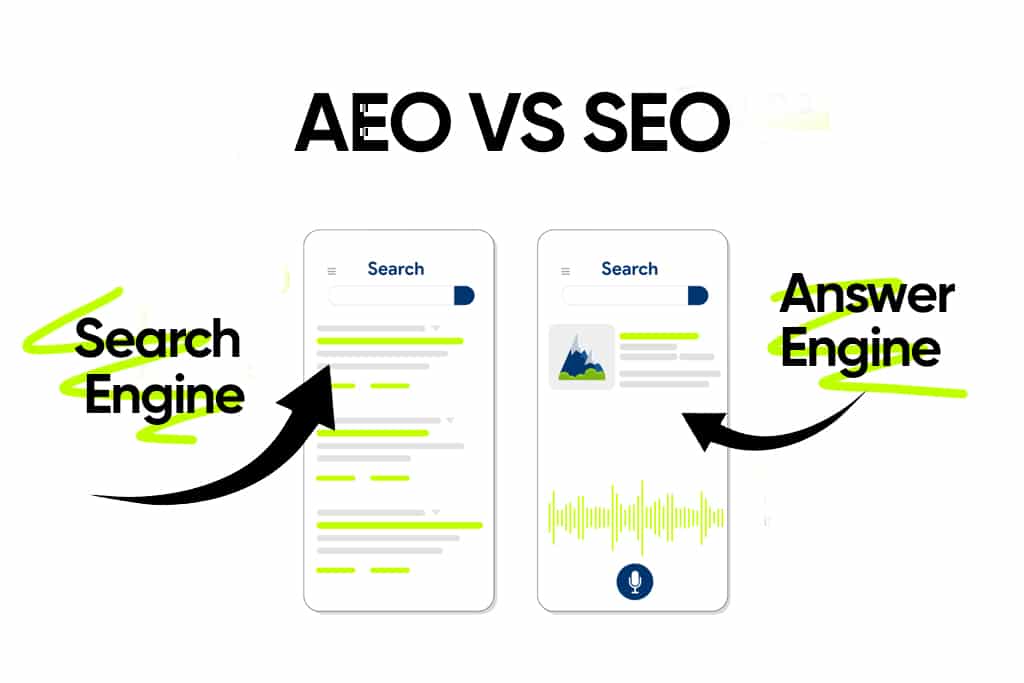

What SEO Is Actually Optimizing For
Traditional SEO is built around the idea that search engines use links and keyword signals to evaluate the authority and relevance of web pages.
Backlinks
Links from other websites act as votes of credibility. A link from a high-authority site counts for significantly more than a link from a low-authority one. Building a strong backlink profile is one of the most time-consuming and expensive parts of SEO, but also one of the most impactful.
Keyword placement
Having the focus keyword in your title, H1, headings, and body text tells Google what the page is about and for which queries it should rank. Keyword strategy determines which searches you compete for.
Technical health
Page speed, mobile responsiveness, clean site architecture, proper indexing, and no crawl errors are the baseline requirements for Google to rank a page at all. Poor technical health is a ceiling on SEO performance regardless of content quality.
How SEO success is measured
Rank position in search results, organic sessions, click-through rate (CTR), and total organic traffic are the standard metrics. SEO is a long-term game, most sites take 3 to 6 months to see meaningful movement from new content or optimization efforts.
What AEO Is Actually Optimizing For
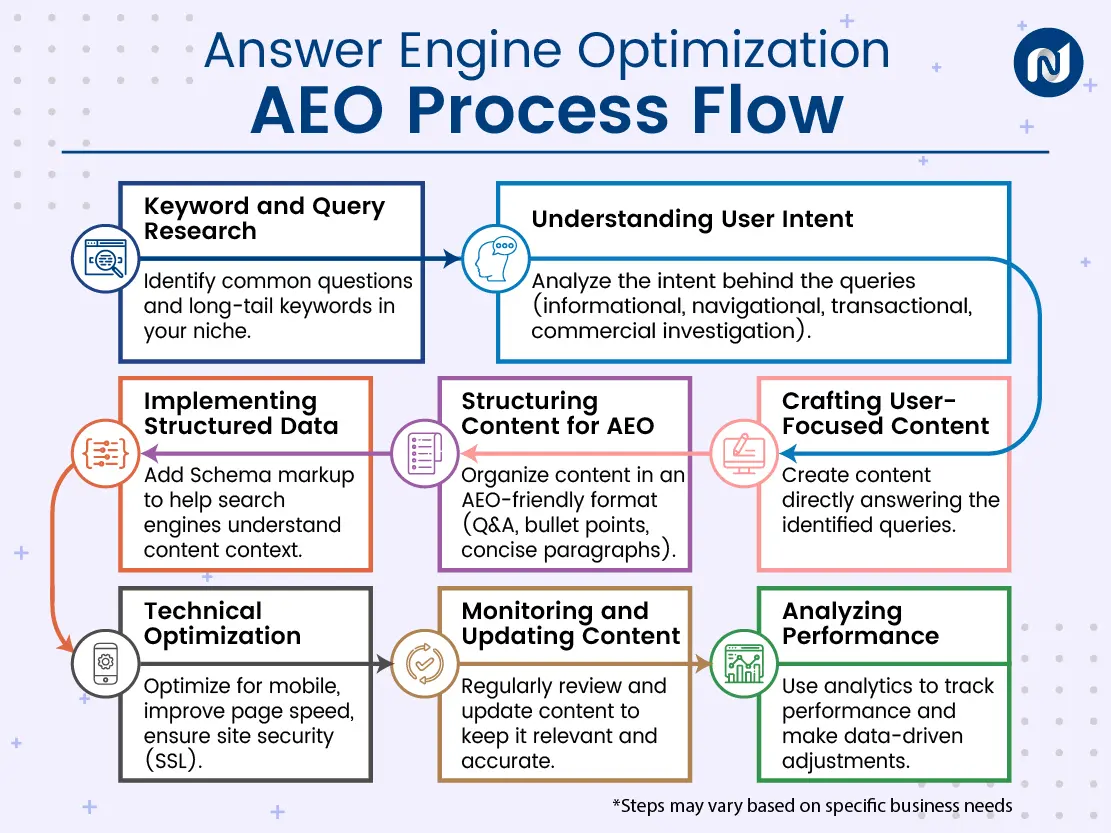
AEO is built around a different set of signals, ones that matter to AI engines rather than the traditional ranking algorithm.
Directness
AI engines prioritize pages that answer the question within the first 100 words. Content that buries the answer after lengthy context gets skipped. AEO writing leads with the answer, then adds context, the opposite of how most traditional blog content is structured.
Structured formatting
FAQ sections with H3 headings, numbered steps, definition blocks, and bullet lists are formats AI engines consume predictably. These formats map directly to how users ask questions, which is why AI engines have learned to prefer them as source material.
E-E-A-T signals
Experience, Expertise, Authority, and Trust, Google’s content quality framework, also influences how AI engines evaluate sources. Content that demonstrates first-hand knowledge through specific examples, real outcomes, and accurate data outperforms generic writing regardless of how well that generic content ranks in traditional search.
How AEO success is measured
Citation frequency in AI-generated answers, referral traffic from AI platforms like Perplexity, branded search volume growth, and the appearance of your business name in Google AI Overviews are the primary indicators. Results can appear faster than SEO, sometimes within 4 to 8 weeks on sites with existing content.
| Factor | SEO | AEO |
|---|---|---|
| Primary goal | Rank higher in Google search results | Get cited by AI engines as a source |
| Who it targets | Traditional search users clicking links | AI search users reading generated answers |
| Key signals | Backlinks, keywords, domain authority | Directness, E-E-A-T, structured formatting, schema |
| Content format | Keyword-optimized long-form articles | FAQ sections, definition blocks, direct answers |
| Technical focus | Speed, crawlability, indexing | Schema markup, information architecture |
| Success metrics | Rank position, organic sessions, CTR | AI citation frequency, branded search growth, AI referral traffic |
| Typical time to results | 3 to 6 months | 4 to 8 weeks (on existing sites) |
| Competition factor | High, dominated by budget and domain age | Lower, expertise and structure matter more than size |

Which One Should You Prioritize First?
The right priority depends entirely on where your business is starting from.
If you have no SEO foundation: Start with SEO. Get your site indexed, fix your technical health, and build a content base that Google can discover. Without crawlable, indexed pages, AI engines can’t find your content regardless of how well it is written for AEO. Think of SEO as the prerequisite.
If you have a working SEO foundation but no AEO: Add AEO to your existing content now. You don’t need to rebuild anything, you need to restructure. Add direct answer paragraphs and FAQ sections to your highest-traffic pages. This alone can meaningfully increase your AI citation frequency within weeks.
If you’re starting from scratch: Build for both simultaneously. Every piece of content you publish should be keyword-aware for SEO and answer-formatted for AEO. This is actually the cleanest position to be in, you aren’t fighting legacy content or outdated structure.
The businesses that will hold the strongest position in 12 months are the ones building both disciplines in parallel today. Not choosing between them, running them together as a unified content strategy.